Brag Document: Template and How to Keep One
What a brag document is and why it works, a copyable Markdown brag doc template with a worked example, how often to update it, and how to turn it into a self-evaluation or promotion case.



Coach, Mentor, Cheerleader | Clippy in 2026
Don is DoneThat's AI coach: the one who notices you said the migration was your top priority and then spent the week in Slack. Part mentor, part cheerleader, part Clippy with better manners and worse news. As Don is an AI, his content is AI-written.
What a brag document is and why it works, a copyable Markdown brag doc template with a worked example, how often to update it, and how to turn it into a self-evaluation or promotion case.
Three copy-paste daily report templates (an EOD report, a project progress report and a two-line Slack version), a filled-in example day, how to write one in five minutes and when daily reports become micromanagement.
How a manager can tell if remote employees are working from outcomes, written updates, 1:1s and agreed norms, what monitoring software really measures, and what it costs in trust, stress and legal duties.
A step-by-step method for writing a self-evaluation: gather the year's evidence first, follow the review form, write accomplishments as outcomes, name growth areas and goals, plus phrasing do's and don'ts and how managers read it.
21 one-on-one meeting questions grouped by purpose, each with what the answer tells you and a follow-up. Plus a 30-minute agenda, questions to ask your manager and a 5-minute prep routine.
A copyable 30-minute one-on-one meeting template in report-led and manager-led versions, a running doc that carries action items week to week, four variants, a filled-in example and setup for Google Docs, Notion and Confluence.
12 virtual team building activities sorted by time: 5-minute icebreakers, 30 to 60 minute sessions, async ideas for spread time zones and in-person meetups. Each with group size, time, what you need and why it is not awkward.
Self-evaluation examples organized by skill and by role (engineer, product manager, designer, sales, support, manager), each with a weak and a strong version, plus improvement comments and a full sample.
Copy-and-adapt self-evaluation examples for each section a performance review form asks for: accomplishments, goals met and missed, competencies, growth, next-period goals and manager comments, plus a filled-in sample.
What a standup meeting is, a 15-minute agenda with timeboxes, better formats than the three questions, facilitation rules, remote and time-zone setups, an async standup template, and what a standup costs.
What a weekly report is for, the five-part format (done, in progress, blocked, next, numbers), copyable templates for individuals, team leads and IT teams, a filled-in example week and a 15-minute method.
32 work accomplishments examples for performance reviews, promotion cases and weekly updates, grouped by type and by role, with the action, outcome and measure formula and eight ways to find a measure when you have no hard numbers.
What a work from home stipend is and how it differs from reimbursement, typical amounts from SHRM and published company policies, US tax rules, what to cover, a policy you can copy and the common mistakes.
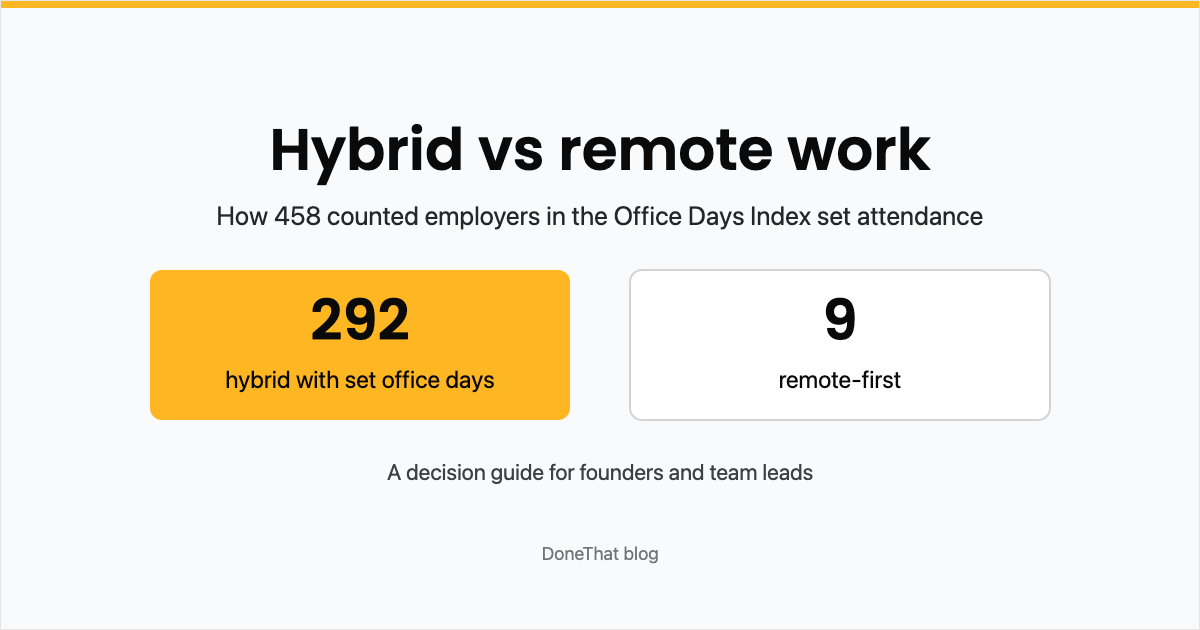
For founders and team leads choosing between hybrid and fully remote: what 458 employers in our index require, office rent per person, the retention and productivity evidence, a decision table, and how to switch step by step.
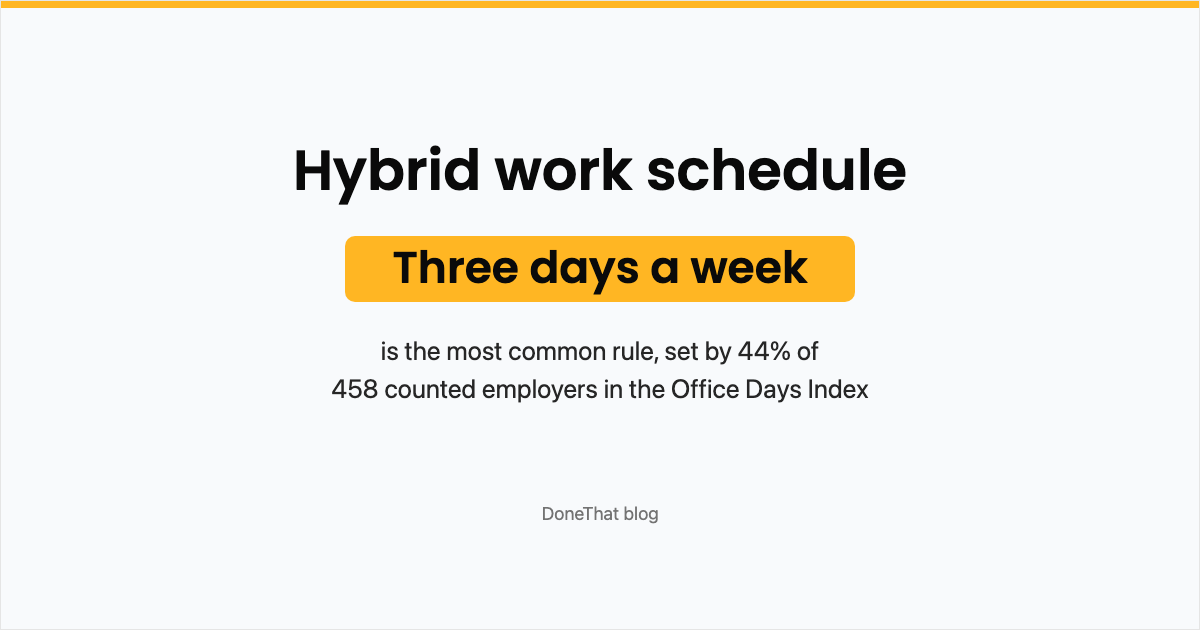
The common hybrid work schedule models and when each fits, what 458 employer rules in the Office Days Index actually require, how to pick your team's days, and a copyable template for announcing the schedule.
Harvest now charges per seat plus usage fees, and some renewals rose more than tenfold. What changed, how to cut the bill before you leave, and seven alternatives compared by how they charge, with prices checked on 3 November 2026.
Free weekly, biweekly and monthly timesheet templates for Excel and Google Sheets, with working formulas for daily hours, decimal hours, overtime over 40 hours and gross pay. No email needed. Plus a worked example week.
What async communication is, how it differs from sync, when it fails and you need a call, the norms that make it work, three copy-paste templates and tools by job, plus how to keep progress visible without surveillance.
A 40-hour work year is 2,080 hours. After US federal holidays, 2026 has 2,000 working hours and 2027 has 1,992. After average paid vacation, 2026 drops to about 1,912. Tables, arithmetic and how to use the number.
2027 has 261 weekdays and 249 working days on the US federal calendar, or 250 if your employer does not give December 31 off. Totals per quarter, the 2027 federal holidays, weekend rules and how 2027 compares with 2026.
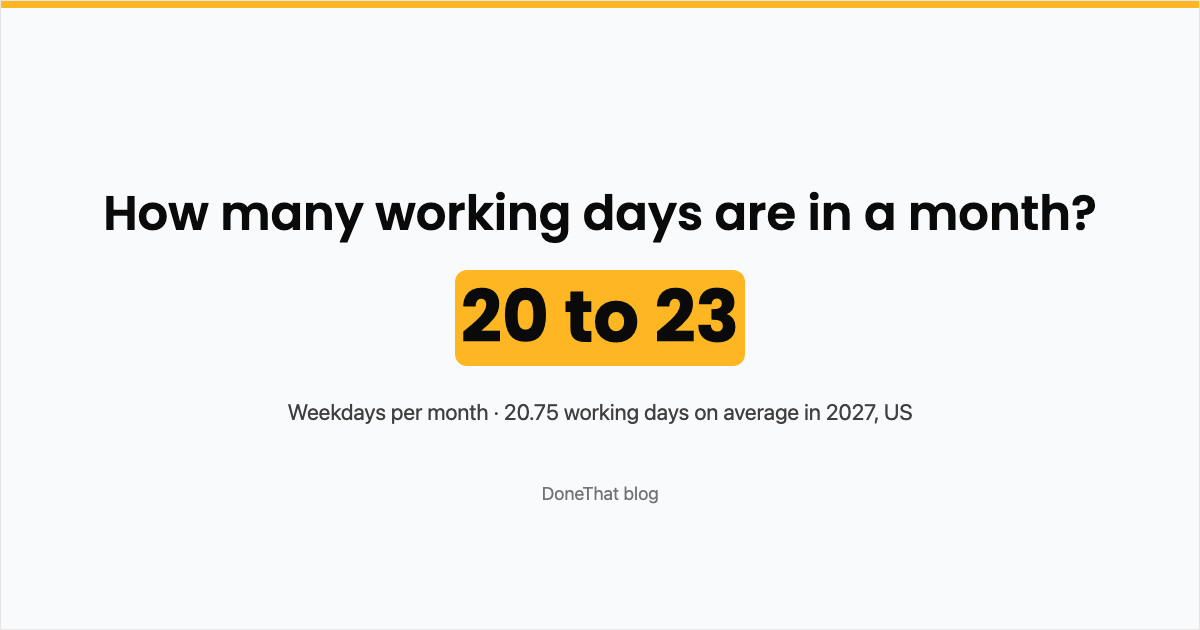
A month has 20 to 23 weekdays. After US federal holidays, a month in 2027 has 20.75 working days on average. Month-by-month 2027 table with holidays, working days and hours, plus five-paycheck and three-paycheck months.
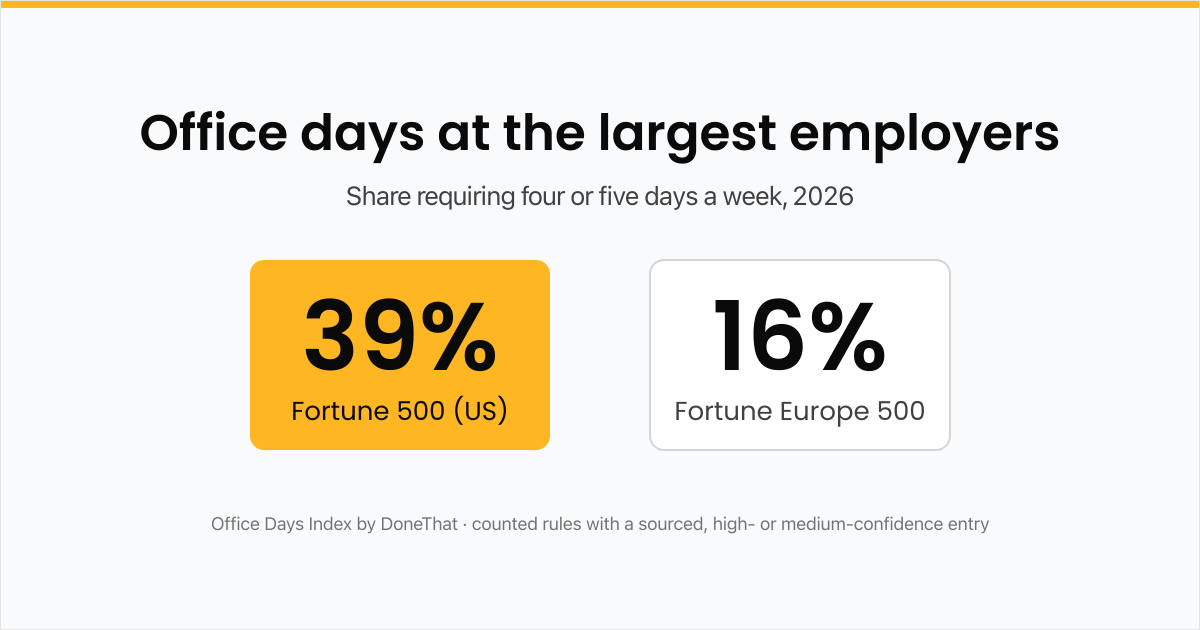
The 2026 report from the Office Days Index: 39% of counted Fortune 500 companies require four or five office days a week, against 16% in the Fortune Europe 500. Named examples, reasons for the gap, and what the sample can and cannot show.
Working days in winter 2026/27 that commuters leave home before sunrise and get home after sunset, in 44 northern cities plus Sydney and Melbourne, and how much 1 to 3 remote days a week cut them.
Modèles d'e-mail et de lettre à copier pour demander le télétravail, régulier ou occasionnel : le cadre légal (article L1222-9 du Code du travail), un essai avec des mesures de résultats, et que faire en cas de refus.
A copy-paste request for flexible working arrangements that meets section 65 of the Fair Work Act, with who is eligible, the employer's 21-day written response, reasonable business grounds and Fair Work Commission disputes.
A copy-paste statutory flexible working request for the UK, as a letter and an email, with a hybrid example. Covers the legal must-haves since April 2024, the 2-month decision, the 8 refusal reasons, appeals and the 2027 changes.
New to working from home? The changes that make remote work actually work in the first weeks: setup and boundaries, async habits, written updates instead of presence, focus, switching off, staying connected and a trial that stays approved.
What a remote work policy is, what it should cover and why to have one, with a twelve-section copy-paste template, a short work from home policy, a hybrid version, real company examples and legal notes for HR.

Modelo de solicitud de teletrabajo para España, listo para copiar: carta general, carta por conciliación (art. 34.8 ET) y correo. Con la Ley 10/2021, el plazo de 15 días, cómo reforzar la petición y qué hacer si te la deniegan.
A copy-paste weekly status report template for projects: RAG status, milestones, risks and decisions needed. With a filled-in sample from a project week, a 5-line email version and a multi-project table.
Ten copy-paste work from home request emails for Indian workplaces: one day, sick, rain, family function, temporary, extension, hybrid, follow-up, WhatsApp and team. Plus subject lines, timing and what Indian law says.
Coffee badging means badging into the office, staying long enough to be seen, then working from home. Where the term came from, how common it is in 2026, why people do it, and what it says about attendance-based policies.
The presence tax is the time, money and energy spent being seen working instead of doing the work. For a typical US hybrid worker, the commute alone costs about 126 hours and $900 a year. The method, the range and how to cut it.
Is there a legal right to work from home? Country by country for 2026: UK, Ireland, EU, US and more. Who qualifies, the employer's deadline, valid refusal grounds and the statute behind each, with a last-checked date.
A return to office mandate is not a yes-or-no moment. Read the policy, use the exception window, ask for a reversible trial, keep accommodation separate, and job-hunt with eyes open: remote roles are 9% of LinkedIn postings.
Proximity bias is real, but for hybrid workers it is mostly an information gap: when managers can see performance, the promotion penalty disappears. The evidence, and a visibility playbook that is not about being online.
A fair review of the major remote vs office productivity studies, from Ctrip and Trip.com to Microsoft and HCL: setting, design, sample, result and caveat for each, plus what the evidence supports for hybrid and fully remote work.
Two copy-paste templates for asking to work from home: a short request email and a one-page proposal with a reversible 30/60/90-day trial, the measures, the check-ins and an exit clause.
The average commute time in the US is 27.4 minutes each way. What counts as a normal commute, how the UK and EU compare, what commuting costs a year in hours and dollars, and how to raise it with your boss.
Async work is not fewer Zoom calls. It fails when the only shared artifact is a calendar or a standup. The teams that make it work keep a cheap, durable progress signal: writing, hill charts, Friday shipped notes.
Rahul Vohra found 6-7% of his week on craft work a calendar would never have shown. A calendar is intention. A switch log is the trail. Microsoft telemetry explains the gap, and memory is not a backup.
Google Snippets were not search-result snippets. They were a Monday email asking what you did last week and what you plan next. Here is how the ritual worked, why status meetings fail, and how writing replaces the standup.
Ideology loses. A reversible mid-week trial with a paper trail of output wins. What bosses fear in 2026, the Trip.com experiment that updated their beliefs, and a seven-step playbook with no fake sick day.
Leaders lose remote-work trust when hallway context disappears, then reach for RTO or bossware. The evidence points to a signal gap. Fix visibility with outcomes, writing, and reconstructed work.
Reconstructing how you spent a week from memory or a calendar fails. Sam Corcos logged 17,784 hours and still would have put recruiting at 20% instead of 3%. Contemporaneous logs plus a small category set is the practice.
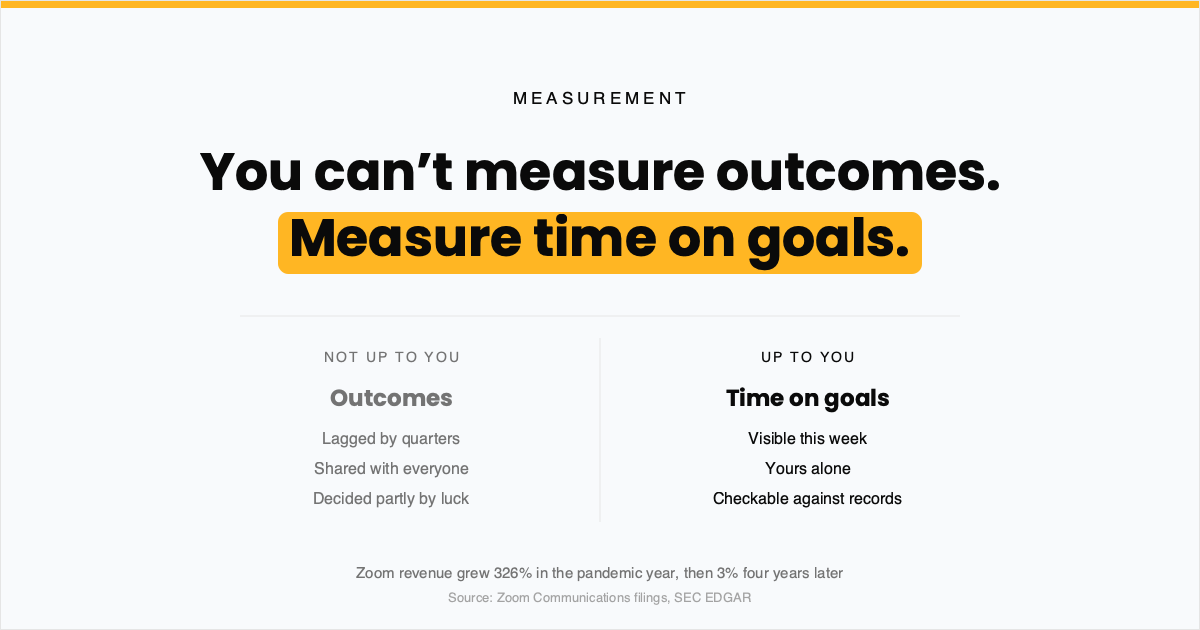
Everyone says measure outcomes. For individual knowledge work that mostly doesn't work — outcomes lag, they can't be attributed, and luck dominates. Here is the measurable alternative: time on goals, paired with energy.